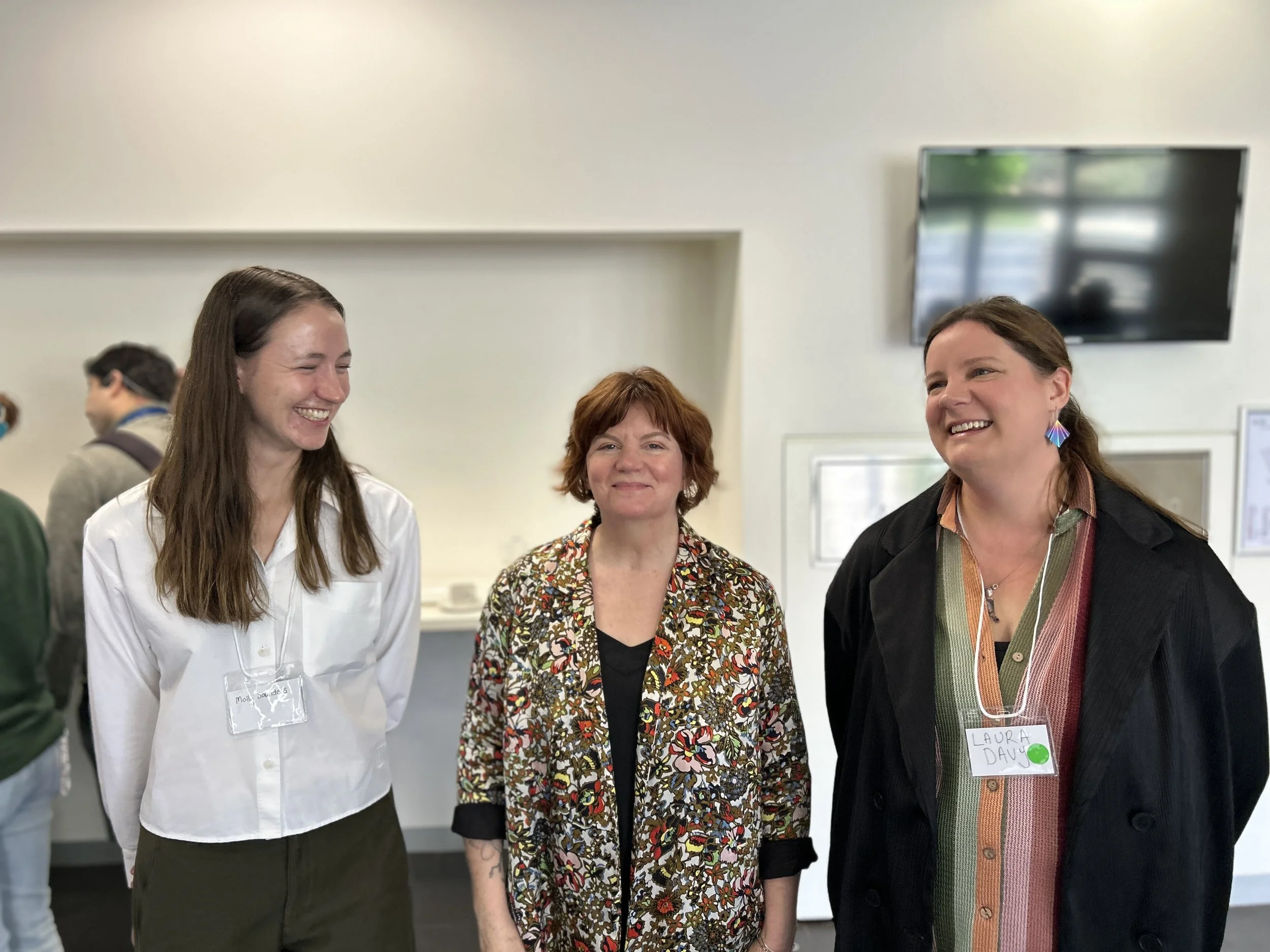


Across Australia and globally, disability policy increasingly promises to give people with disability a voice. Yet, as many people with disability can attest, having a voice is not the same as being heard. Recent research by Dr Laura Davy and Molly Saunders at the Australian National University explores radical listening as a potentially transformative approach to strengthening participatory democracy in everyday spaces.
Read MoreDr. Jennifer Hester Principal Evaluator at Good Shepherd Australia and New Zealand (GSANZ) reports on developing a Submission to The Standing Committee on Social Policy and Legal Affairs, Parliament of Australia - The relationship between domestic, family and sexual violence victimisation and suicide.

Drawing on practitioner evidence and service system expertise, it emphasises the urgent need for improved data, integrated service responses, and long‑term recovery supports for women, children and young people.
Content note: this post and the submission discuss family, domestic and sexual violence and suicide, which some readers may find distressing.
Read MoreWelcome to Power to Persuade for 2026! We begin the year with a post from Alexa Ridgway (RMIT University), who discusses the need for formalised, co-ordinated and government-funded support for the family and friends of missing migrants and non-citizens - a salient issue in the context of missing Belgian tourist Celine Cremer, whose friends travelled from Belgium to assist with search and rescue efforts.
Read MoreIn 2025, Power to Persuade has invited articles on the theme of the relevance of rights for 21st century policy. This post from Everyday Human Rights, an independent, non-political human rights educational consultancy, argues for the continued relevance of human rights frameworks as a tool for policy makers.
Read MoreIn Australia, progress on complex reform has been limited in recent years - hampered by, among other things, competing evidence claims and resourcing allocations.
This post highlights the findings of a new project on Social Licence to Operate (SLO) as a set of policy practices that can support major reform. The project was co-designed and funded with ANZSOG and the South Australian Department of Premier and Cabinet, and conducted by Ruth O’Connor, Sara Bice, and Hayley Henderson at ANU’s Crawford School of Public Policy.
The project draws on a series of commissioned case studies, which feature Power to Persuade moderators Sophie Yates and Sue Olney discussing current NDIS reforms.
Read MoreThis week's posts are being sourced by the Life Course Centre (@lifecourseAust) to continue the conversation on social and economic disadvantage as part of Anti-Poverty Week 2025 (@AntiPovertyWeek). Gender inequality extends beyond income and employment into the structures of everyday life. Unequal relationships and domestic expectations can limit women’s autonomy, financial independence and heighten their vulnerability to poor wellbeing and mental health. PhD student Alysha Gray from The University of Queensland and the Life Course Centre explains.
Read MoreThis year, Anti-Poverty Week 2025 (12-18 October) continues its campaign to raise awareness and understanding of the causes and consequences of poverty in Australia, and to encourage action to end it. Dr Shannon Edmed and Professor Simon Smith from The University of Queensland (@UQ_News) and the Life Course Centre (@lifecourseAust) have been examining how sleep can be an indicator and mechanism of disadvantage.
Read More