
A long and winding road to nowhere: older women’s experiences of Newstart

The largest age demographic on the Newstart Allowance are people aged 55+. For Anti-Poverty Week, and as submissions to the Senate Inquiry into the adequacy of Newstart and related payments roll in, Policy Whisperer Susan Maury (@SusanMaury) and Sarah Squire (@SquireSarah), both of Good Shepherd Australia New Zealand (@GoodAdvocacy) unpack what this means for older women.  Drawing on case studies and reflections from Good Shepherd’s financial counsellors, they outline key concerns and policy solutions to improve outcomes for women experiencing poverty later in life. This analysis draws from Good Shepherd’s submission to the Newstart Inquiry; you can access the submission here.

Read More
The trouble with girls… and what to do about it

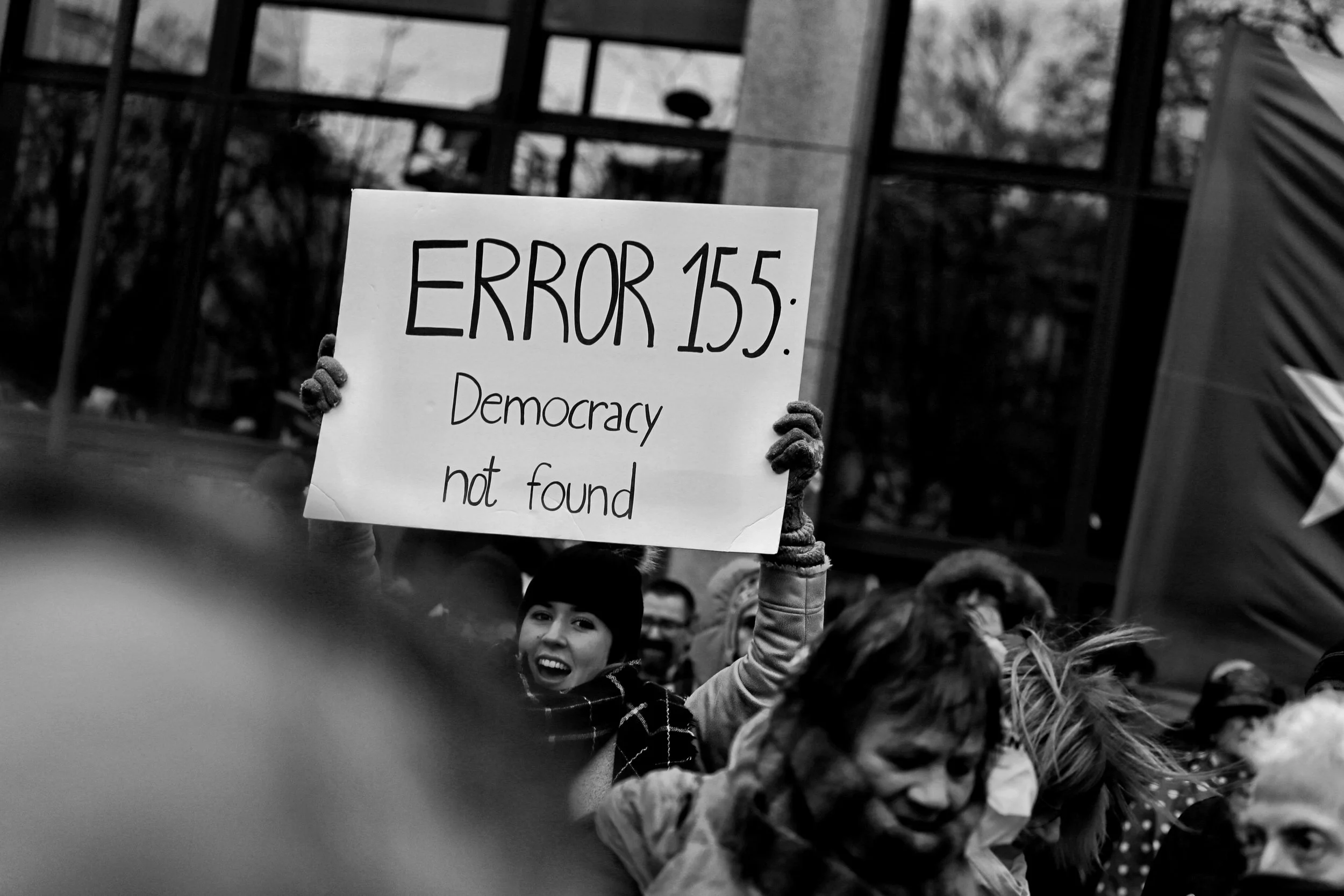
Today, on International Day of the Girl Child, freelance writer Catherine Shepherd and Sarah Squire (@SquireSarah) of Good Shepherd Australia New Zealand (@GoodAdvocacy) examine the state of play for girls in Australia, drawing on research and parenting experiences. Reflecting on some key challenges for girls’ wellbeing, they outline policy levers and practical tips for raising ‘unscripted and unstoppable’ girls.

Read More
How a free tax clinic is rescuing the overwhelmed

In this BusinessThink re-post, Dr Ann Kayis-Kumar from the University of New South Wales Business School introduces us to the Nationwide Tax Clinic Program. These federally funded clinics are designed to meet the needs of Australia’s vulnerable taxpayers. Dr Kayis-Kumar explains why and how these clinics came about and concludes with the overarching purpose of the Tax Clinic program, to foster a more socially just tax system.

Read More
Blunt mechanisms fail to move unemployed people into viable employment

Despite the government’s commitment to and investment in a Welfare to Work strategy to incentivise people into employment, many people are languishing on the extraordinarily low Newstart Allowance for long periods of time. What exactly is going wrong? In a submission to the Victorian Government’s Inquiry into sustainable employment for disadvantaged jobseekers, Sue Olney (@olney_sue) of the Public Service Research Group (@PSResearchG) at UNSW Canberra provides a brief but comprehensive outline of why current levers seem to be falling well short of government targets. You can read the full submission in its original format here.

Read More
How ParentsNext is Harming Survivors of Trauma

Punitive policies presume there is nothing stopping people from changing their behaviour other than recalcitrance. Research indicates, however, that many people who are subject to compliance welfare have multiple and complex barriers to aligning with government-identified outcomes. Today’s analysis by Katherine Curchin (@KatieCurchin) from the Australian National University explains how the ParentsNext program aggravates trauma, causing more damage than good for women who are trying to rebuild their lives.

Read More
The 2019 Power to Persuade symposium: examining systems thinking and big data in social policy

Power to Persuade is hosting a one-day symposium in Melbourne on Thursday 10 October 2019. Featuring a keynote address by Julian Corner, CEO of Lankelly Chase in the UK, and three panels of experts drawn from universties, government and the not-for-profit sector, the symposium will examine the evolving use and understanding of evidence in social policy. Our co-director Dr Sue Olney from the Public Service Researach Group at UNSW Canberra sets the scene and invites you to join the discussion.

Read More
The Inquiry into the Family Law System is a poorly disguised Trojan horse

In response to the inquiry announced this week into Australia’s Family Law System, the team at the Women’s Research, Advocacy and Policy (WRAP) Centre at Good Shepherd Australia New Zealand has pulled together some of the concerns expressed by advocates for women’s and children’s safety.

Read More
What behavioural insights can tell us about the inadequacy of Newstart

Behavioural insights teams around the world have demonstrated that understanding the quirks of human psychology can help policymakers more effectively respond to tricky problems in fields as diverse as energy consumption, organ donation, recycling, healthy eating, and tax compliance. But what about using behavioural insights to move people off of income support? In today’s blog, Dr Katherine Curchin (@KatieCurchin) of ANU explores how behavioural science can help us think about the poverty trap created by the inadequate rate of Newstart. This post draws on her chapter on 'Behavioural public policy and poverty' in the Routledge International Handbook of Poverty out in October 2019.

Dr Curchin will be sharing her insights at the upcoming Power to Persuade Symposium, contributing to a panel on “The use of evidence through a gender lens.” Register now for 10 October 2019 at the beautiful Melbourne Museum.

Read More
Quality, not just quantity: How government investment into care work could grow the economy

The undervaluing of caring work is a key driver of gender inequality. In today’s analysis, Kathy McDermott of the National Foundation for Australian Women (@NFAWomen) provides a summary of their submission to the Royal Commission into Aged Care Quality and Safety. They argue that investing in social infrastructure is economically savvy, providing supports for our biggest-growing industries while also tackling the gender pay gap.

Read More
Eligible for what? ParentsNext exemptions and the troubling tale of outsourced social security decision-making

Continuing her series of original posts on Australia's employment services system, Dr Simone Casey (@SimoneCasey) explores the implications of outsourced decision-making in social security through the lens of the ParentsNext program. Dr Casey is an affiliate of the RMIT Future Social Services Institute (@FutureSocialAU).

Read More
Hope for the Honey Bee?

You may have noticed at your local common a place for wild flowers, attracting a mobile constellation of bees, butterflies, and a host of minibeasts. Honey bees mean different things to each of us: an excuse to reminisce on childhood crayoning, the producer of that delicious syrup we all enjoy as honey, or a symbol of order and harmony in nature. However, they also serve a critical environmental role as a major fruit and vegetable pollinator. In these days of economic and political uncertainty this may not be foremost in policy makers minds, however, bees are vital for our survival and are a living indicator of the health of our environment. In this post, Gino Abdul-Jabbar suggests with honey bees under threat that we need to direct our individual attention and garner collective policy support for the plight of the humble honey bee.

Read More
Changing the global approach to youth mental health

In the past, the greatest health challenge for young people was to survive childhood. Thankfully, in most of the world this is no longer the case. However, the big health issue now for young people is mental health. Consulting with experts and stakeholders around the world, the Global Youth Mental Health Framework project will provide guidance for funders about the costs of investing, and the costs of not investing, in youth mental health. It also aims to produce a youth mental health care framework that is responsive to local needs, and a toolkit to help communities all over the world advocate for youth mental health services. On International Youth Day, Eóin Killackey outlined a new undertaking to make youth mental health a global priority.

Read More
How can retailers improve access and outcomes for consumers with cognitive disabilities?

In the wake of reports of service providers' poor conduct towards consumers with cognitive disabilities emerging from the Royal Commission into Banking, the Energy and Water Ombudsman of Victoria and the Essential Services Commission, Dr Yvette Maker and Professor Jeannie Paterson from the University of Melbourne offer two sets of resources here to promote a ‘facilitative’ approach to contracting and consumer transactions for people who have difficulties (or perceived difficulties) with learning, concentrating on, processing, remembering, or communicating information, and/or with decision-making.This piece was originally published by the Consumer Policy Research Centre.

Read More
Supercharging discrimination: The Targeted Compliance Framework and the impact of automated decision-making

The United Nations Special Rapporteur on extreme poverty is preparing a report on the human rights impact of the introduction of digital technologies in social security systems. The Human Rights Law Centre made a submission to the Special Rapporteur focusing on Australia’s social security system and how technology is increasingly being used to target and punish people, especially single mothers, through programs like ParentsNext. Monique Hurley (@monique_hurley) from the Human Rights Law Centre (@RightsAgenda) summarises their submission, focusing on the gendered impacts. The full submission is available here. More information about the Special Rapporteur’s report is available here.  

Read More
Men’s behaviour change programs: good news and lessons from the Pacific

A ground-breaking faith-based program in the Pacific seems to be having significant, and hopefully longer-term, impacts on men’s violence and abuse, with several important lessons for similar programs elsewhere, writes Miranda Forsyth, ANU Pacific Institute Convener and Associate Professor at ANU’s School of Regulation and Global Governance.   

Read More
Cultural Change and individual impact: towards respectful relationships on Australian campuses

Sue Webeck, manager of The Australian National University’s (ANU) newly set-up Respectful Relationships Unit, describes the university’s approach in responding to the issues raised in the Human Right’s Commission’s ‘Change the Course Report: National Report on Sexual Assault and Sexual Harassment at Australian Universities’ in 2017, and the challenges involved in creating systemic change while responding to the ongoing needs of survivors.  

Read More
What next for Australia’s second National Action Plan on Women, Peace and Security?

What does peace and security mean? More importantly, is the experience of it different for men and women? Unpacking the subtleties of FREEDOM for men and women, but also for Australia and the rest of the world is Dr. Anu Mundkur. Anu is the Head of Gender Equality for CARE Australia and a former Steering Group Member of the Australian Civil Society Coalition on Women, Peace and Security. Anu has extensive practical experience in the fields of international relations, gender and development. Her areas of expertise include women peace and security; feminist approaches to international relations; gender and international aid. This blog post is based on national roundtables organised by the Australian Civil Society Coalition on Women Peace Security in 2017.

Read More
Power to Persuade