
Anthony Albanese, You Were Once One of Us
In today’s post, in Anti-Poverty Week, Rebecca O’Connor reminds Australia’s Prime Minister that government investment made his future possible. He was raised in public housing by a single mother and was the first in his family to attend university, and he talks openly about how his background shaped his politics. But could his mother’s hopes for his future be realised in today’s policy environment?
This post is sourced by the Antipoverty Centre, a collective of activists, advocates and researchers with direct, contemporary experience of poverty and unemployment.
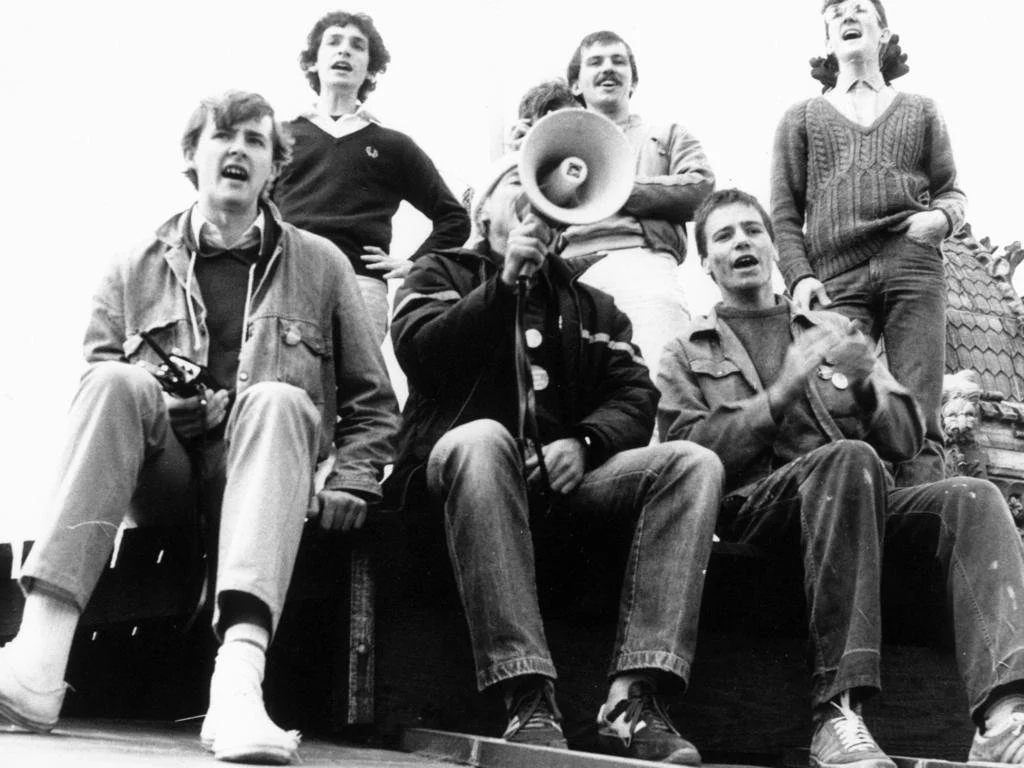
Anthony Albanese grew up in a council house in Camperdown, the only son of a single mother on the disability pension. In his 2021 Budget Reply he said, "Good government changed my life." He said that home gave them "pride and dignity and security".
I am 52 and receive the Disability Support Pension. I live in social housing in Brighton. I have never been this impoverished. Not broke. Not experiencing "financial hardship". Impoverished.
I have not bought shoes in three years. I am wearing the one pair of jeans I have been able to afford in two years. My underwear has holes in it. In the basement, my old car sits broken because I cannot afford to repair it.
That car is a perfect monument to poverty. To somebody with money, a broken car is a problem followed by a solution. You ring the mechanic, swear at the bill, pay it and get your car back. For me, the sequence stops at broken.
This is what we misunderstand when we say poor people have "limited choices". Often there are no choices. Choice requires alternatives, and alternatives require money. The car deteriorates. The tooth worsens. Cheap shoes wear out faster. You pay more later because you could not afford enough earlier.
Too often I eat baked beans, noodles, bread, pasta and rice because the question is not what would nourish me, but what will stop me being hungry. I receive fruit and vegetables through charities, produce supermarkets can no longer sell. I am grateful. Sometimes it hurts.
There is a peculiar emotional arithmetic in cutting the bad part from a donated apple while reminding yourself to be thankful. Poverty brings shame, even when you know being poor is not a moral failure.
I am grateful for my home, a beautiful apartment. Trees fill my windows and birds sing in them. Across the way is a park with a lake. My dogs bring me comfort and happiness, and the beach is their favourite place. But I can no longer walk them there because my feet hurt too much in the shoes I have. I miss taking them and feel guilty about it. Poverty has taken something free and made even that inaccessible.
I arrived in social housing after family violence. A secure roof removed one terror, but not the agency violence and poverty had taken. Some neighbours are high-needs, through addiction or mental illness, and antisocial behaviour makes the building unsafe. They have been failed too. With money, I could pay a bond and leave. Without money, staying is not entirely a choice.
Money's greatest luxury is agency. It allows a person to leave, repair, replace, refuse, seek another opinion and respond to their own life.
I live with Fowler's syndrome and spent years seeking answers. People with money can go privately. The poor person waits. The choice was the specialist or the roof over my head. I paid the specialist. I am now slightly behind on rent.
Dentistry makes poverty visible. With money, treatment is about preservation: fillings, crowns, root canals. When you are poor, you wait until the damage is so advanced that extraction is the only option left. Eventually, poverty can take your teeth, and your dignity with them.
My niece is turning one. Buying her a present means deciding which food I can go without and which bill I can pay late. The shame of that sum is its own kind of poverty.
I do not want government to give me a beautiful life. Parts of my life are already beautiful. I want enough money to participate in the life I already have.
More than anything, I want the return of choice. Most people exercise it dozens of times a day without noticing. When it disappears, you notice its absence everywhere. You make do. You wait. You wear it again. You stay where you are. You receive what is offered and say thank you because you are thankful. But gratitude is not agency, and survival is not living.
I am not asking Anthony Albanese to remember poverty sentimentally. I am asking him to remember it politically. Look at the people living on the payments and in the housing that once made his future possible. Look at our shoes. Look at our teeth. Look at the food we eat when nobody is watching.
Good government changed Anthony Albanese's life. I believe him. The question is whether people like us are still considered worth enough good government to change ours.
Content moderator: Antipoverty Centre