Speaking truth to power: a tribute to Dr Raelene West
The international disability research community has lost one of its fiercest and most principled voices with the passing of Dr. Raelene West last week. Rae was a member of Power to Persuade’s moderating team, and we are grieving her loss professionally and personally. Here, Aleta Moriarty and Sue Olney reflect on Rae’s commitment to improving the lives of people with disability, her influence on her academic peers and young scholars, and on her legacy.
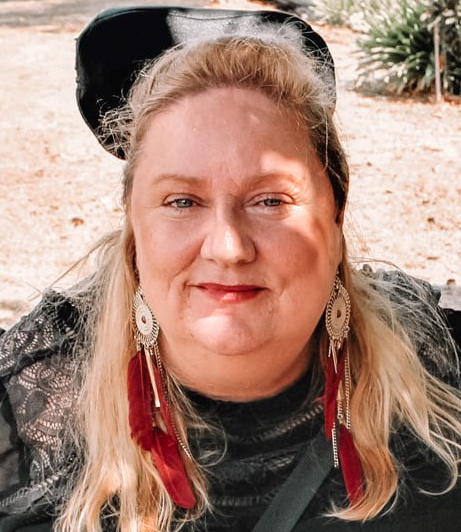
The international disability research community has lost one of its fiercest and most principled voices with the passing of Dr. Raelene West. Known to her colleagues as Rae, she most recently worked as a Research Fellow at the Melbourne Disability Institute at the University of Melbourne and was a volunteer moderator for Power to Persuade.
Rae committed her life and work to creating social change after becoming a quadriplegic as a result of a car accident more than two decades ago.
Her scholarly footprint was wide and deep. Across appointments at RMIT University, UNSW Canberra, and the University of Melbourne, she interrogated the structures that either liberated or constrained people with disability: the National Disability Insurance Scheme (NDIS), the Transport Accident Commission (TAC), aged care frameworks, community visitor schemes, and the emerging commercialised care markets she memorably described as an "Uber-style wild west." Her work on human rights and health, ableism, and individualised funding drew international attention, and her papers on NDIS unregistered providers became among the most cited in their field.
Rae was the kind of tireless, relentless academic and supervisor who went the extra mile for her students, colleagues and community. She always showed up, prepared submissions, chaired committees, contributed to papers, and argued fiercely, publicly and on the record, that people with disability, and other groups often marginalised, deserved better. You can see Rae in action on that front in this presentation during Social Sciences Week in 2021 for The Australian Sociological Association (TASA), from 14:40 minutes in this video.
She pushed back against hate speech targeting people with Down syndrome. She challenged inaccessible public spaces and housing. She researched work to improve employment for people with disability. She wrote about community housing and group home violence. She convened the Disability Research Community of Practice at the University of Melbourne, holding space for a new generation of scholars to think harder and do better. She had the highest of standards and was one of the best critical disability theory academics in Australia.
Outside work, she loved tennis, podcasts, books and music. Her Friday tunez on social media sparked waves of nostalgia for 80s and 90s music tragics and heralded the weekend for her many followers.
She always fought for the underdog.
Rae leaves behind a body of work that will shape disability policy and scholarship for decades to come, and a community of colleagues, advocates, family and friends who are poorer for her absence and extraordinarily richer for having known her.
There will forever be a Rae shaped hole in all our lives.