
Cutting NDIS social community participation may save money - or might it risk creating bigger costs for other government agencies
Recently announced changes to Australia’s National Disability Insurance Scheme (NDIS) will reduce funding for people with disability in the scheme to participate in the community. In today’s post, Jodie Bailie (University of Sydney), Zoe Aitken (University of Melbourne), Glenda Bishop (University of Melbourne), and Alex Devine (University of Melbourne) explain the flow-on risks.
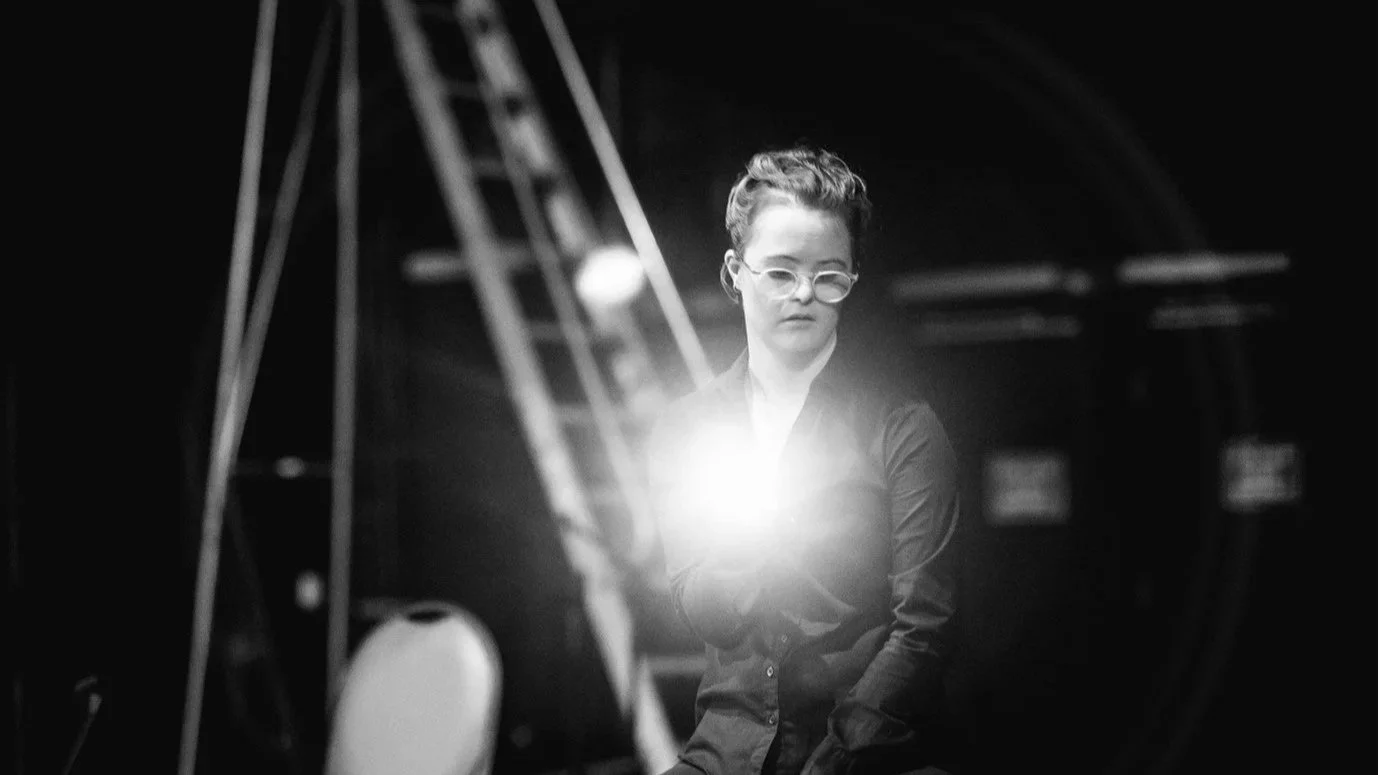
Photo caption: NDIS participant volunteering at their local regional theatre company, contributing to community. They greet guests and help them find their seats, building social skills and confidence in the process. It benefits not only the individual but the wider community. When people with disability are visible and active, it helps break down negative stereotypes. Being able to volunteer like this is only possible because of community and social participation supports through the NDIS. Without this, she would likely be at home. The photo is published with the permission of the person in it and the photographer. Image credit Kate Holmes.
The Health and Disability Minister Mark Butler recently announced that the social and community participation component of NDIS budgets will be reduced by 30%. While this may save the NDIS money and respond to concerns about budget sustainability in the short term, it will have a significant impact on affected participants, families and communities. In this article, we draw on our research and our lived experience as carers and people with disability to show why these cuts are not fair and why they may not reduce costs to the government over the long term.
What are social and community participation supports?
Enhancing social and community participation is a core objective of the NDIS. The scheme currently provides funding to help eligible participants purchase the supports they need to take part in community, social and recreational activities. These supports help people get out of the house, connect with others, and build confidence. This might include support to attend cooking classes, sporting activities, social outings or to develop new skills.
People with disability already face significant barriers to community participation. Transport can be difficult, environments are not always accessible, community attitudes can exclude, and many services can be complex to navigate without assistance. Participation supports are often the difference between staying connected or being excluded from the community. Addressing barriers to participation is important because meaningful social connections are essential for people to thrive. Proposed cuts to these supports risk further reducing connections, with impacts on social isolation and loneliness.
People with disability already more likely to experience social isolation and loneliness
Our research shows that across Australia, people with disability are much more likely to feel lonely than people without disability - around 1.5 to 1.9 times more likely. While loneliness has decreased over the last 20 years for people without disability, it has not improved for people with disability. The gap is even larger for some groups, including people with intellectual or learning disability, psychological disability, and people with brain injury or stroke.
This is not unique to Australia and is consistent with international research. For example, a large study in the United Kingdom showed that the prevalence of persistent loneliness was 46% for people with disability compared with 22% for people without disability. Against this backdrop, cutting community participation supports risks widening the existing gap in loneliness and social isolation between people with disability and others.
May end up costing taxpayers more over the longer-term
Social isolation and loneliness are considered a public health priority. Loneliness and social isolation are associated with poor physical and mental health. General population studies have shown that loneliness is associated with an increased risk of stroke, heart disease, diabetes, cognitive decline, and premature death.
It also affects mental health, with people who are lonely twice as likely to experience depression. Loneliness is linked to anxiety and, in some cases, thoughts of self-harm or suicide.
The impacts go beyond health. Young people who feel lonely are more likely to struggle at school and achieve lower qualifications. For adults, loneliness can make it harder to find or keep a job and may affect income over time. This in turn can further impact health, since unemployment and low-income lead to poorer health outcomes.
In Australia, the cost of loneliness already is estimated to be around $2.7 billion annually, mostly due to health costs. The proposed cuts to social and community participation supports, and their impact on physical and mental health, are likely to lead to substantial longer-term economic costs, such as from increased GP and hospital visits. The cuts are also likely to contribute to more disabling experiences, resulting in the need for additional services and supports through the NDIS.
Where to now?
The Government says these changes will be introduced from 1 October 2026. It has also announced a $200 million Inclusive Communities Fund which it says will be used to ‘rebuild capability among community organisations’ to deliver participation activities.
We welcome investment in community organisations and this is needed to support participation in the community. But this needs to happen alongside, not instead of, access to individual participation supports. Not all participants want to attend group activities, and maintaining choice is essential. Just like for non-disabled Australians, many NDIS participants rightly want to spend their leisure time on individual pursuits.
Mark Butler raised concerns during his National Press Club address about the quality of the supports facilitating social and community participation. He described situations where support workers are disengaged “scrolling on their phone”. This indicates a problem with quality of supports, not about whether the supports are needed. The answer is to improve that quality, not to reduce access to the very supports that enable people to connect and participate.
These cuts will not only affect individual NDIS participants and their families. They will have flow on effects across the whole system. Given the known impacts on health, when people become more isolated or lonely, demand for health and crisis services increase. Costs shift elsewhere. These cuts may save the NDIS budget in the short term however the taxpayer might end up paying more over the longer term.
Funding: JB and ZA are Chief Investigators on the Centre of Research Excellence in Achieving Health Equity for All People with Disabilities (AHEAD; GNT2035278; 2014–2019). ZA is also a Chief Investigator on the NHMRC Synergy Grant, Developing interventions for better lifetime mental health for young Australians (aged 15–24 years) with disability (GNT2010290; 2022–2027). ZA, AD and GB are Chief Investigators on the MRFF Million Minds Mental Health Research Mission project Policy solutions to improve the mental health of Australians with disability (2024940; 2024–2026).
Content moderator: Sue Olney