
Barriers to accessing justice for sexual and reproductive health rights violations within the current justice system in Australia
This post by Hannah Fearnside is based on a presentation she gave on behalf of Asia Pacific Women’s Watch for a panel event, with the Beyond Beijing Committee Nepal, ‘Strengthening Legal Pathways for Sexual and Reproductive Health, Rights and Justice: Women and Girls Demand Access to Justice’ at the United Nations Commission on the Status of Women (CSW 70). Hannah is a lawyer with almost a decade of practice and policy experience in family violence and family law. She is a Master of Public Policy student and research affiliate at the Global Institute for Women’s Leadership. She is also a participant in the Women in Strategic Policy (WISP) program run by the Strategic and Defence Studies Centre at ANU and Girls Run the World. A professional ‘yapper and tapper’, Hannah sits on the board of Voices of Influence and is passionate about access to justice, intersectional feminism and gender equality. She was a 2026 delegate to the Commission on the Status of Women at the United Nations in New York City with The Persephone Network.
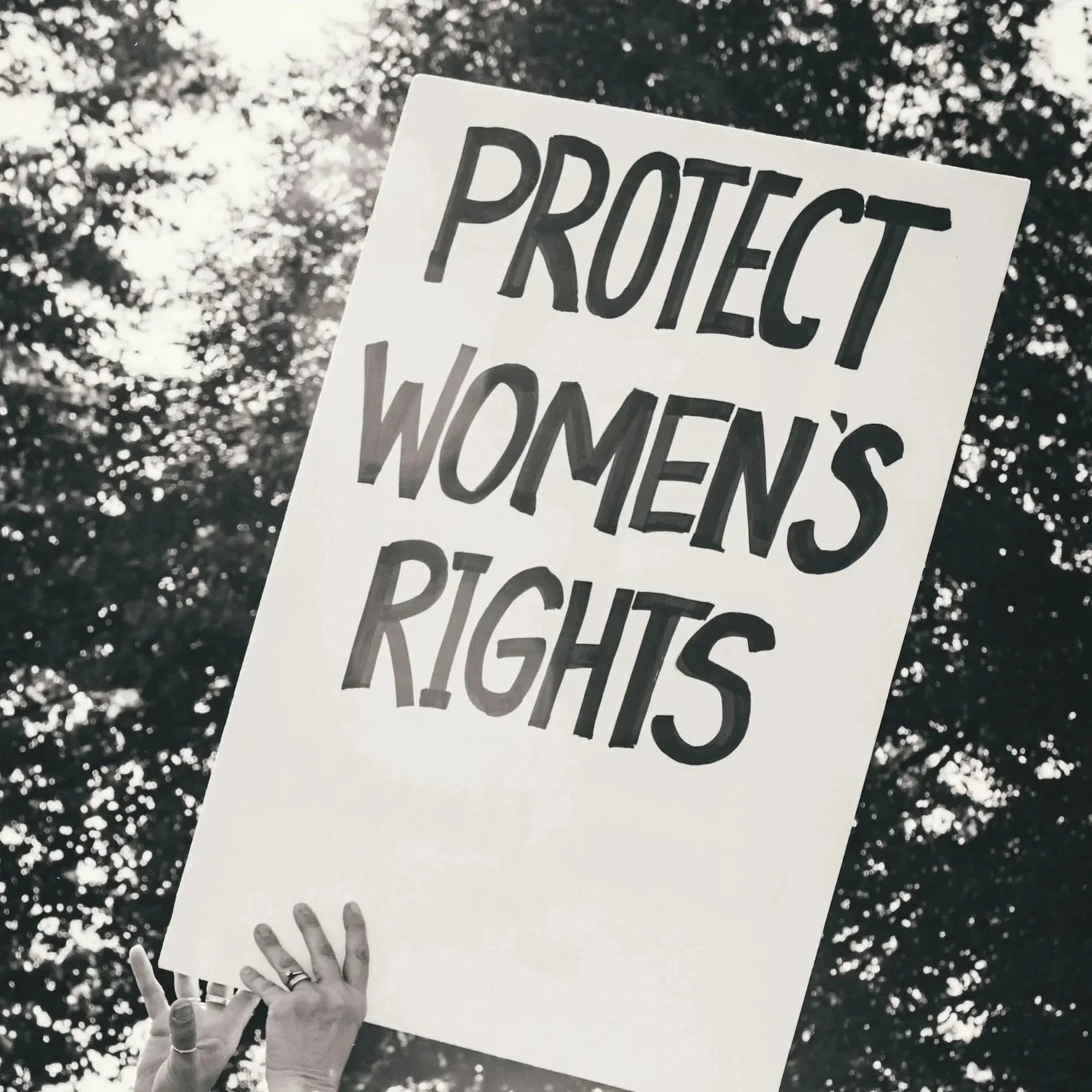
The current state of affairs in Australia when accessing justice for sexual and reproductive health rights (SRHR) violations is mixed. The Australian Government has invested significant resources in the last three years and is in the midst of enormous, ongoing reform in the family, domestic and sexual violence space. However, we cannot risk losing sight of the end goal, ending violence against women and children in one generation, by enabling the dilution of SRHR in key international agreements.
When we think of justice, our minds usually jump to legal frameworks, but access to justice is a chain: first being able to name the harm, being heard when we decide to report harm, accessing support to recover from harm, navigating procedures, obtaining a remedy, and seeing it enforced. The importance of having laws in place cannot be understated, and as of 2023, abortion was decriminalised and legalised in all States and Territories in Australia. Protesting or harassing people within 150-metre "safe access zones" around abortion clinics is also illegal across all jurisdictions. However, a right on paper is not a right in practice if it is too difficult or dangerous to utilise.
Access to abortion in Australia is often deemed a ‘postcode lottery’ where location determines the cost, availability, and type of service, particularly impacting women in regional, rural, or remote areas. A requirement for parental consent can also be a barrier for young people, even where family is part of the control or harm. While people with disabilities may experience questions about their decision making capacity or difficulty seeking help due to a lack of communication support. Migrants and minority communities may also face communication barriers, experience a lack of culturally safe services, and fear of immigration or policing consequences.
While the Australian SRHR system operates outside of the direct impact of decisions such as Roe v Wade in the United States of America (USA), its influence is still felt. Since the final decriminalisation in 2023, there have been repeated attempts across jurisdictions to restrict abortion rights in Australia. Leading to organisations such as Amnesty International to call for the inclusion of access to abortion under A Federal Human Rights Act.
Women who try to report sexual harm such as rape, sexual assault, or tech facilated and image based abuse, a recent inquiry by the Australian Law Reform Commission found that 9 out of 10 women do not report their most recent experience of sexual violence to the police. And in some Australian jurisdictions, between 75 to 85 per cent of reports to police do not proceed to charge. These statistics disproportionately impact women with intersecting identities, like First Nations or minority women who have likely had repeated, poor interactions with the police.
For those that do proceed through a criminal justice process, conviction is low and attrition rates high, due to barriers acessing legal assistance due to cost or availability, travel and time burdens, and the ongoing impact of persistent myths and misconceptions about sexual violence. Women experiencing continuing family and domestic violence, responses are often siloed and without reliable protection orders, safe shelters, and witness support, pursuing a case can increase danger. We also know that the danger is increasing. In the 2022 to 2023 financial year, the homicide rate of women at the hands of a current and former partner increased by 30% in Australia. We also know that this violence, and the lack of systemic response is a burden disproportionately borne by First Nations women, who are 27 times more likely to be hospitalised, usually at the hands of a perpetrator who is not indigenous. This is not a coincidence, it is a failure of our institutions. This is compounded by digital abuse. Online harassment, doxxing, and non-consensual sharing of images, alongside increasing use of Australia’s defamation laws can be used to silence complainants and advocates. A justice pathway that cannot protect people is not a real pathway.
The Australian Law Reform Commission report, Safe, Informed, Supported: Reforming Justice Responses to Sexual Violence made 64 recommendations, including expanding access to voluntary restorative justice processes in Australia. Survivors of sexual harm have asked repeatedly for multiple justice options, investment in prevention, and embedded consent and gender equality education at every level of our education and legal systems.
Other sexual and reproductive harms must also receive investment and attention including, harm that takes place in medical and healthcare settings, such as inadequate informed consent procedures in obstetric care or forced sterilisation. As well as women who experience reproductive coercion, such as, threats of abandonment or isolation if pregnancy does not occur, deception about being infertile or vasectomy and financial threats for continuing a pregnancy among many others.
In the lead up to CSW, the Persephone Network spoke with young people across Australia about what their priorities were. Young people repeatedly spoke about the importance of bodily autonomy and sexual and reproductive health rights for women, girls and gender-diverse folks.
In terms of a practical reform agenda we suggest:
Survivor-centred, rights-based justice pathways that link health, psychosocial services, and legal support.
Legal aid and community legal empowerment, including paralegal models and mobile services in rural and island contexts.
Specialised training and protocols for police, prosecutors, judges, and court staff on sexual reproductive health rights, coercion, trauma, and discrimination.
Privacy and safety protections, including against technology-facilitated violence and retaliation.
Institutional accountability mechanisms for healthcare-related violations, including independent complaints pathways.
Data and monitoring that is safe, disaggregated, and used to improve performance rather than punish survivors.
Australia is a middle global power and in the Asia Pacific Region, it's our priority to be a good neighbour and work collaboratively as we struggle to eliminate gender based violence across our region. However, this intention is hollow, if we continue to come into international forums and talk about best practice without also acknowledging that we are still struggling to get this right at home.
Since the 2022 election, Australia has invested a lot of money, policy and effort into family, domestic and sexual violence. Sustained energy and investment in this space is the only way we are going to see ongoing progress. In addressing the Commission on the Status of Women (CSW), the Head of the Office for Women, Padma Raman demonstrated this ongoing commitment saying, ‘in Australia, we understand that justice extends beyond courts and laws. It includes the systems, services and institutions that shape women’s daily lives – both online and offline’. We look forward to working together, as a regional community to make sure everyone can access the SRHR that they deserve. While there has been significant progress in this space, for many Australians, the path to SRHR is hypothetical. We do not want to see the likelihood of SRHR violations increase, through language dilution on the global stage or, following other areas of the world in weakening protections. We owe it to our communities to push for continued investment, prioritisation of survivors, funding for protection and support where needed, and continued development of our data ecosystem to make sure we have the tools to build on our hard fought SRHR gains.
Content moderator: Brianna Delahunty