‘This is Violence’ Priority reforms to address economic abuse in New Zealand
In today’s post, Brittany Goodwin, the Policy and Engagement Lead for Good Shepherd New Zealand, shares a recent policy campaign, which focusses on systems change in the economic abuse space. To learn more visit thisisviolence.co.nz
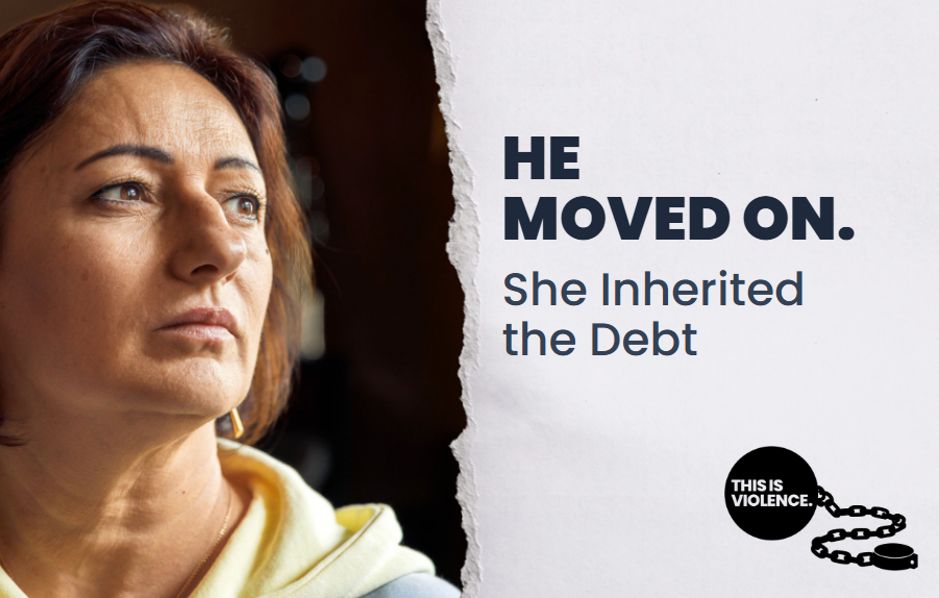
Image credit: Home - This is Violence
Economic abuse is one of the least widely recognised and understood forms of family violence, yet it has profound and long-lasting impacts on the lives of victim-survivors.
Economic abuse is a form of family violence that uses coercive, controlling, and threatening behaviour to restrict or remove a person’s financial freedom, autonomy, and security. Research shows that 15% of ever-partnered women in Aotearoa New Zealand have experienced economic abuse.
Despite the prevalence of economic abuse, it is rarely recognised and responded to as a form of family violence. Yet the impact can be devastating.
A lack of financial independence and dealing with the impact of economic abuse are key reasons people stay in violent relationships or are unable to overcome the enduring effects of abuse and establish a life free from family violence. Good Shepherd New Zealand estimates show it costs around $10,000 to separate from an abusive partner. When victim-survivors are able to leave, many carry coerced debt, ruined credit and financial harm long after the relationship ends, through no fault of their own. Consequently, women who experience economic abuse are at increased risk for both poor mental health and financial insecurity. This is violence.
In response to this, Good Shepherd New Zealand has launched a new, non-partisan, movement called ‘This is Violence’. We seek to raise awareness of economic abuse and to push for systemic reform to prevent and respond to economic abuse in a way that better supports victim-survivors.
We are calling on Ministers, Members of Parliament, and Government officials to better recognise financial control, ruined credit, withheld payments and coerced loans and debt as forms of family violence. Government needs to improve our laws and systems that trap victim-survivors and perpetuate the harm caused by these forms of family violence.
Our specific asks include nine policy recommendations, drawing on evidence and insights from the past five years of Good Shepherd New Zealand’s Economic Harm Service, as well as international learnings. Countries such as the United Kingdom and Australia have focused on amending legislation, policies, and processes to better support victim-survivors of economic abuse over the last five to ten years. New Zealand laws and systems that don’t acknowledge and respond to this form of abuse adequately are lagging behind.
Policy recommendations have been developed in close partnership with the National Collective of Independent Women’s Refuges, and are endorsed by around 80 other organisations from across the family violence, financial, and gender equity sectors. Cross-sectoral support for these changes is essential, because economic abuse intersects a number of different services, systems, and regulatory environments.
We need to stop treating economic abuse like a hardship or budgeting problem, and instead respond to it as a long-term driver of inequality, hardship, and intergenerational harm in Aotearoa New Zealand.
Economic abuse is family violence. And it’s time we recognised it as such. Because when people use money to control, trap and harm others, they shouldn’t be able to walk away without consequences.
Author: Brittany Goodwin, Policy and Engagement Lead, Good Shepherd New Zealand
Content moderator: Dr Sophie Kedzior, Senior Research and Evaluation Analyst, Policy Advocacy & Service Impact, Good Shepherd Australia New Zealand