
Counted out: A census where every voice counts, but what you have to say may not.
Important policy and funding decisions are made very year on the basis of Australia’s Census results. In today’s post, an interdisciplinary and cross-institutional group of researchers - Elizabeth Hitches (University of Queensland), Prof Stuart Woodcock (Edith Cowan University), Arianna Manning (Griffith University), Ebe Ganon-Davey (University of New South Wales), Prof Paul Harpur (University of Queensland), Dr Ren Perkins (University of Queensland), Dr Ronny Andrade Parra (RMIT University), Abideen Amodu (University of Queensland), Cathy Nguyen (Griffith University), Ellie Faith (Independent Schools NSW), Jason Cullen (University of Queensland), and Gabrielle Jansen - discuss what is missing in the Census data and the implications of a skewed national snapshot informing research and policy. They conclude with a call for action to ensure that all voices are heard and valued in the next Census.
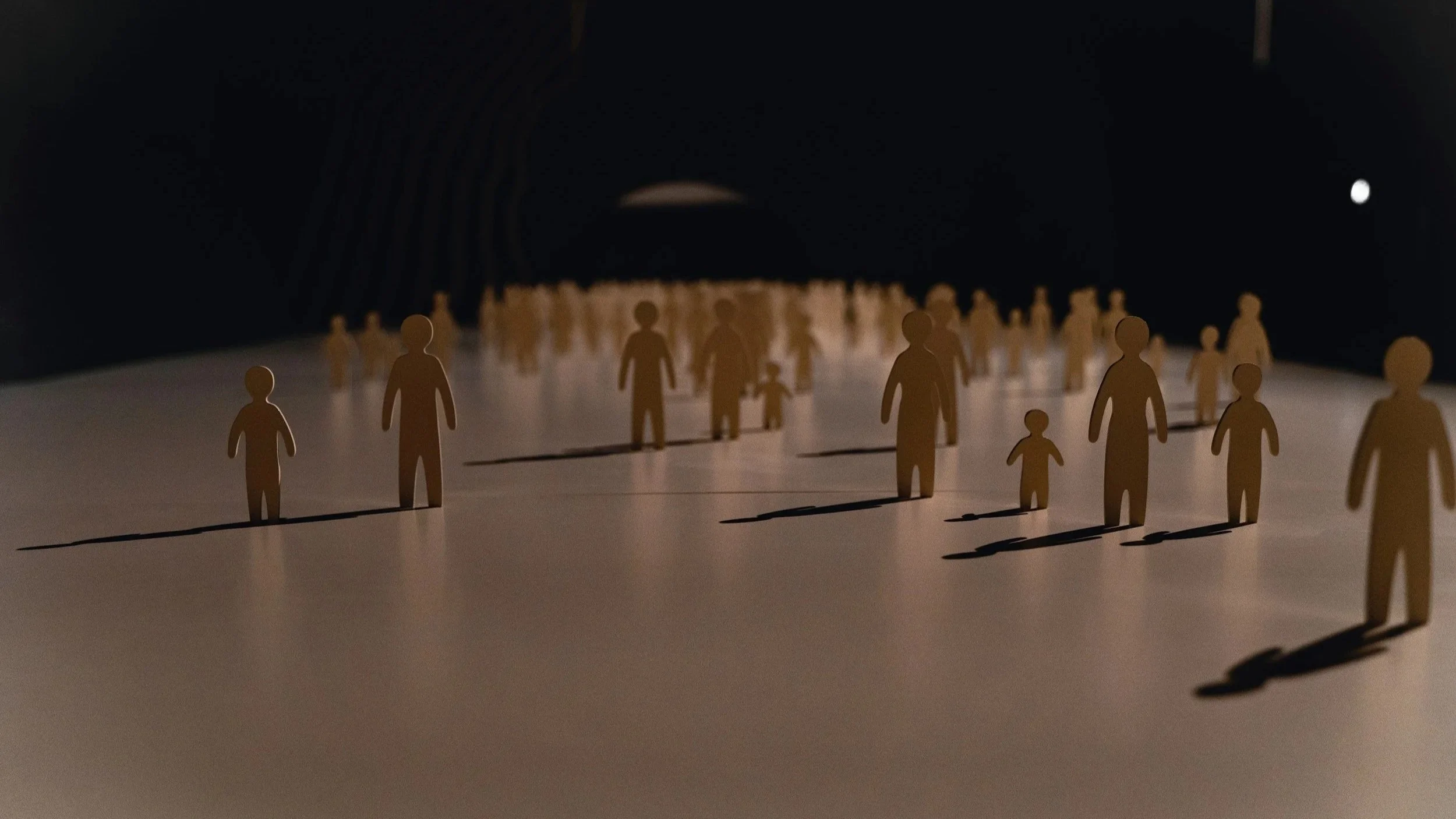
Image description: blank human shapes on a curved white surface
In the lead up to the 2026 Census, the Australian Bureau of Statistics (ABS) assured us that every answer counts.
We know that important policy and funding decisions are made on the basis of Census results every year: this includes how we design services and infrastructure such as transport, schooling, and health care. The information the ABS collects through the Census also serves as valuable data for researchers around the country. It’s the most comprehensive national snapshot we have.
But what does it mean to be counted if the instrument used does not adequately reflect who we are? What if key aspects of your identity or experience are invisible to the decision-makers and power-brokers who run our country?
We are an interdisciplinary and cross-institutional group of researchers with an interest in inclusive, accessible, and high-quality data collection. Individually and collectively, we observed a range of ways that the 2026 Census questions failed to recognise and record the true richness, nuance, and diversity throughout the Australian population.
As researchers and as Australians from all walks of life, this concerns us. What is invisible in our data is unlikely to be considered in the decisions which shape our lives.
Perhaps more importantly, what we count sends a strong message about the experiences we value, and those we don’t.
What, and who, is missing?
Drawing on our own identities and experiences, we have observed a number of gaps in the Census instrument which severely limit the accuracy, representativeness, and utility of the data it collects.
One glaring omission is in how the Census accounts for disability. The Census identified disability by asking if a respondent requires “help from others”. If a person with disability does not need help from a person - perhaps they use tools, technologies, or other supports to address barriers in their daily life - they were unable to make their experience of disability visible in the Census. The ambiguity within question categories also meant experiences such as ADHD and Autism had no clear space to be recognised.
While the 2026 Census included improvements to questions about sex, gender identity, and sexuality, our intersex colleagues were still unable to report on their experiences accurately. People with variations in sex characteristics continued to be othered behind the “another term” response option.
The Census included Aboriginal and Torres Strait Islander status, but did not capture the full diversity of cultural identity through Country, Nation, community, clan, or language group. Aboriginal and Torres Strait Islander languages also sat within the generic ‘other language’ option.
In households with individuals from varying language backgrounds, only the language used most at home was recorded. This meant that regardless of the language, or languages, that an individual may use at work, school, or in other community settings, only that used “at home” was captured.
Households are generally encouraged to complete the Census together. However, individuals could choose to complete their own form if they did not feel comfortable sharing information about themselves (such as gender or sexuality) with others in their household. This option was not widely advertised, leaving some people uncomfortable and uncertain.
Some of these data points are collected through other national surveys such as the National Indigenous Languages Surveys and the Survey of Disability, Ageing and Carers. However, ongoing challenges in data linkage and gaining access to these datasets present limitations to using this information in parallel.
Importantly, relegating the more nuanced matters of disability, sex and gender identity, linguistic diversity, and other important experiences to non-compulsory and siloed data collections continues to reinforce the belief that this information belongs on the margins. When up to a fifth of Australians are people with disability, hundreds of thousands are people with Autism and/or ADHD, nearly a third of Australians were born overseas, almost one million people over 16 identifying as LGBTI+ (i.e. LGBTIQA+), and the same number identifying as Aboriginal and/or Torres Strait Islander, these matters are hardly niche or in the minority. It’s time to stop treating them that way.
This is only a small selection of the gaps, omissions, and limitations we observed while completing our own Census forms. We are investigating opportunities to work together to develop a deeper understanding of these issues, with a view to offering remedies and improvements which are based on our diverse lived and professional expertise.
What’s next?
The 2026 Census results will be released in stages from mid-2027. We encourage anyone who values accurate, inclusive, and accessible data collection to review these closely and engage with the ABS to shape future Census design and collection methods.
Luckily, we aren’t starting from scratch. Scholars around the country have been working on inclusive and responsive data collection methods for many years: from our lived and academic experiences, we have solutions and ideas to share for those who are willing to listen.
This is not only an important issue for national data collections like the Census. Researchers across the nation can also consider how we provide research participants the opportunity to express their perspectives and identities authentically, and ensure they feel valued and safe while doing so. Hitches and colleagues’ forthcoming paper in the journal Quality and Quantity addresses this challenge and invites readers to reflect on their research practices.
We have fewer than five years to fill the gaps in the Census before the questions will be finalised for 2031. Join us in making sure that all voices are heard and valued, not simply those which are easiest to count.
Content moderator: Sue Olney